The latest Industry News
A stackable pallet is a finished pallet that can safely support suitable
freight above it during transport. A non-stackable pallet cannot.
Non-stackable freight can cost more because the carrier may charge for the
unused space above the pallet, apply a higher chargeable weight or add a
surcharge.
Two pallets can have identical dimensions and different freight costs. The
difference may be the space the carrier can use above them, not the weight on
the scales.
There are three separate questions: can the load withstand transport, can it
support freight above, and how does the service charge for it? Answering only
the second can leave you with an unsafe shipment or an unexpected bill.
Four checks before you select stackable
1. Is the shipment fit for normal freight handling?
Start with the goods, packaging and stability of the whole load. They must
withstand the handling and movement involved in the selected service.
A leaning load, damaged base or inadequately secured machine needs correcting
before collection. Selecting non-stackable does not fix those problems. A
properly secured machine with a projecting component, by contrast, may be fit
for transport but unable to support freight above it.
2. Is there a usable loading surface?
The top should be sufficiently flat, stable and wide to support appropriate
freight. Different carton heights, exposed components and narrow supports can
prevent safe stacking.
Consider how weight would reach the load beneath. A flat board across a gap
does not automatically spread that weight safely, and pallet runners or feet
can concentrate pressure on individual cartons.
3. What can the completed packaging actually support?
The weight carried by the pallet base is not the same as the weight the packed
goods can support from above.
Use the packaging or crate designer's load-bearing information where
available. A pallet containing 500 kg of machinery does not automatically
support another 500 kg on top. If stacking is safe only up to a stated weight,
give that limit to Pallet2Ship before booking so the service can be checked.
There is no single top-load allowance that this guide can apply across every
carrier and mode.
4. Do the service rules or instructions require non-stackable booking?
Physical strength is only part of the decision. A service can classify a load
as non-stackable because of its dimensions, packaging or the sender's handling
instruction. Some carriers also impose automatic height rules even where the
pallet itself is strong.
Pallet2Ship treats oversized pallets as non-stackable. Its carriage terms also
classify consignments carrying fragile stickers as non-stackable, with a
surcharge depending on the service. Some carriers also apply automatic height
limits that classify a pallet as non-stackable even when the load itself is
strong enough to support freight above it.
Fragile labels do not create a special handling service
A fragile sticker can change how a shipment is classified and priced; it does
not purchase extra care.
Goods must still be packed to withstand normal freight handling. Pallet2Ship's
terms require items to withstand a short drop and say fragile items should not
be sent through its services. If a fragile sticker is used, the shipment is
treated as non-stackable for pricing; the label does not guarantee gentler
handling or make insufficient packaging acceptable.
Keep genuine handling information accurate. Removing a warning to obtain a
cheaper price does not make the contents or packaging stronger.
Declare stackability in the booking, not just the notes
Writing “do not stack” in a comments box is not a substitute for selecting the
correct stackability when obtaining the quote.
Pallet2Ship's special-request notes are forwarded to the carrier, but its
terms do not guarantee that those requests will be followed. If the booking
says stackable and a note says otherwise, contact Pallet2Ship to have the
booking corrected before dispatch.
The declaration, final packaging and any handling labels should describe the
same shipment.
How stackability affects different freight services
UK pallet networks
On Pallet2Ship's UK pallet services, stackability is part of the quote
declaration. If a non-stackable pallet is booked as stackable, Pallet2Ship's
terms state that surcharges will apply depending on the service and
destination. The practical requirement is therefore to declare the finished
pallet accurately at quote stage rather than assume every UK pallet network
uses the same tariff.
European groupage and part loads
Shared road freight can be priced using volume, pallet spaces or loading
metres. A loading metre represents trailer length occupied across its width.
Where a tariff charges for the floor position rather than the pallet's
physical volume, reducing a non-stackable pallet's height may not reduce the
charge.
Air freight and express services
Air freight is normally charged on the greater of actual and volumetric
weight. A commonly used general-air-cargo formula is length × width × height
in centimetres ÷ 6,000; some express services use 5,000. Stackability can
still affect acceptance or additional handling, but there is no single
non-stackable rule across air carriers. FedEx also states that its
non-stackable surcharge is not a guarantee that freight will never be stacked.
LCL sea freight
LCL means sharing a container with other consignments. Stackability affects
consolidation inside the container as well as handling before and after the
voyage. Non-stackable acceptance and pricing need checking with the selected
consolidator. Maersk, for example, accepts non-stackable LCL cargo, but that
does not establish a universal charge or rule for every LCL service.
Why a low pallet can still attract a higher charge
Non-stackable freight can be charged in different ways. A service may add a
fixed fee, use a pallet-space or loading-metre rate, or apply a
chargeable-height allowance when calculating volume.
Actual height and chargeable height are different. Actual height is what you
measure from the floor to the highest point of the finished pallet. A
chargeable-height allowance is a tariff rule. Always supply the actual
dimensions and the correct stackability; let the quotation apply the service's
calculation.
Nor should you assume that a fixed fee, a height allowance and loading metres
all apply together.
Published carrier example: 200 kg charged as 740 kg
DHL Freight Norway publishes a stackability rule tied directly to height and
packaging. A pallet is treated as stackable for this calculation when its
total height is less than 160 cm including the pallet. Above 160 cm, or if the
pallet is fragile or poorly packaged, it is charged as one full pallet space.
On Continental movements, one Euro pallet space is 0.4 loading metres and the
conversion is 1,850 kg per loading metre:
0.4 × 1,850 = 740 chargeable kg.
A pallet actually weighing 200 kg that falls into that full-pallet-space rule
would therefore be rated at 740 kg — 3.7 times its actual weight. A higher
actual weight takes precedence. For Nordic movements the same published
pallet-space calculation is 800 kg.
The example is a published carrier method, not a Pallet2Ship tariff or a
universal European rule. It shows why height and stackability can change
chargeable weight even when the physical weight is correct.
What a non-stackable surcharge can cost
DHL Express UK's published Non-Stackable Pallet fee is £255 per applicable
pallet, with an exemption for pallets below 30 kg. Its fuel surcharge also
applies to that fee.
For 5–11 October 2026, the published International Time Definite fuel rate is
48%:
| Component | Calculation | Amount |
|---|---|---|
| Non-stackable fee | One applicable pallet | £255.00 |
| Fuel applied to that fee | £255 × 48% | £122.40 |
| Combined surcharge component | £255 + £122.40 | £377.40 before any applicable VAT |
This is the non-stackable fee and its associated fuel charge, not the total
shipping price. Transport and other applicable charges are separate. The
example uses DHL's public list charges; the amount payable on a Pallet2Ship
booking depends on its quotation, service terms and applicable carrier
charges. Check the quote and any adjustment notice for the amount charged on
your booking.
The fuel percentage is dated deliberately. Check the rate for the relevant
service and shipping week rather than treating £377.40 as a permanent tariff.
What happens when stackability is declared incorrectly?
Pallet2Ship's terms state that surcharges will apply when a non-stackable
pallet is declared stackable, with the charge depending on the service and
destination. Correct dimensions do not resolve an incorrect stacking
declaration. [1]
Ask for the reason and calculation behind a re-rating. Check which pallet was
affected, what was declared, what the carrier assessed and whether any fuel or
other additions have been included.
Keep evidence of the finished shipment
Photograph the finished pallet before collection: the top, sides, base,
labels, protrusions and any visible measurements. Keep those images with the
booking declaration and relevant packaging specifications. They can be
valuable evidence if a later re-rating is disputed.
Pallet2Ship requires pre-collection photographs for certain shipments, and its
terms state that failure to supply them where required invalidates insurance
cover. [1]
Non-stackable does not mean lightly packed
A non-stackable shipment still needs secure restraint, suitable outer
protection and a base appropriate for its weight and handling.
For standard Pallet2Ship pallet services, the carriage terms specify a UK or
Euro pallet with four-way access and exclude American pallets. An oversized or
unusual support arrangement should be checked before booking rather than
treated as an automatic exception. [1]
Protect the goods and keep the load stable. If cartons cannot carry a top
load, either use packaging designed for that load or declare the shipment
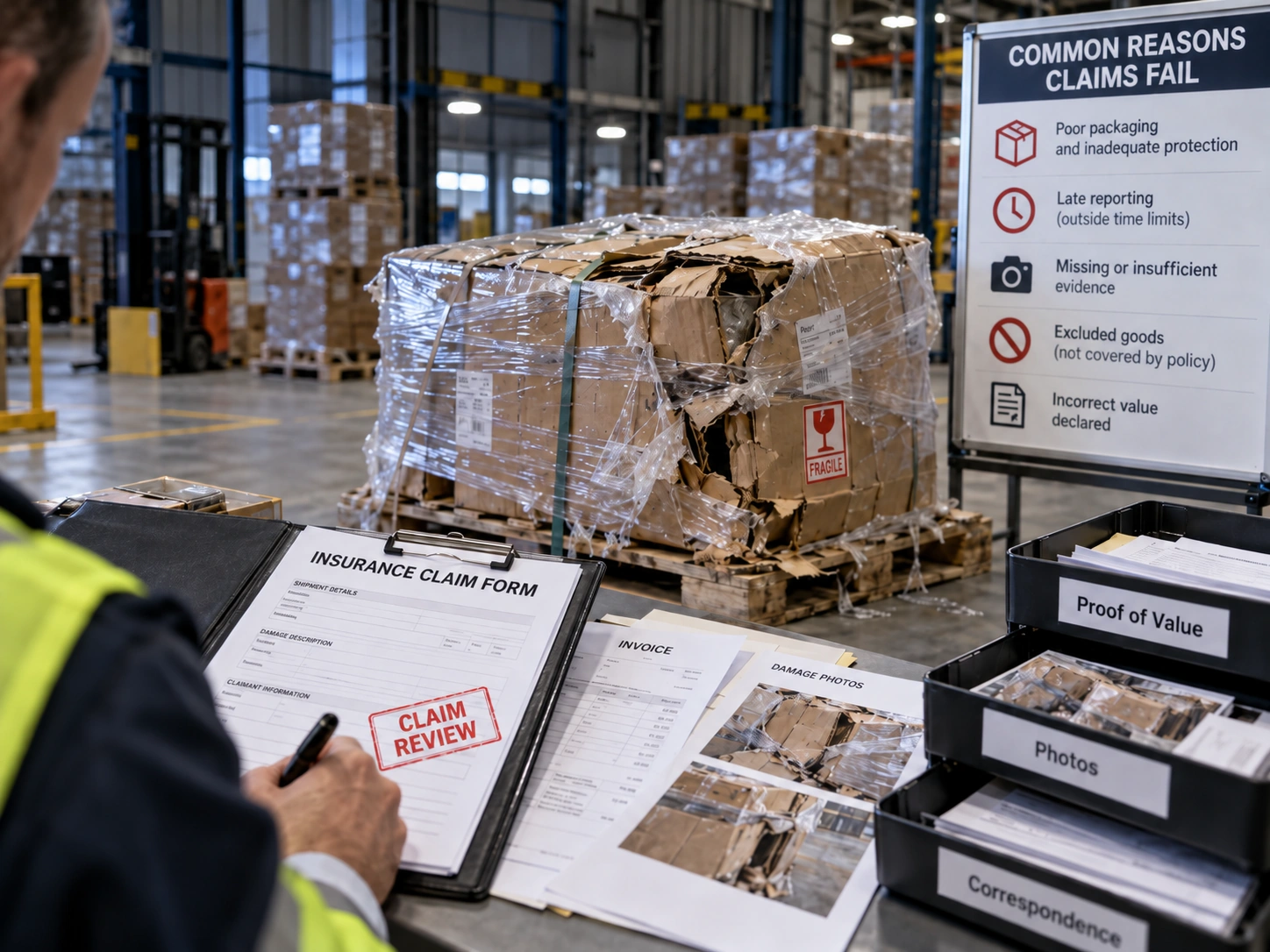
appropriately. Insurance is not a substitute for that decision: insufficient
packaging can cause a claim to be rejected. [1]
Can repacking make the pallet stackable?
Sometimes. Uniform carton heights, correctly designed bracing or a genuinely
load-bearing crate can improve a shipment. A cover sheet alone cannot turn an
unsupported or crush-sensitive top into a safe loading surface.
Compare the complete cost of the stronger packing and the revised freight
quotation. A packaging change is worthwhile only if it produces a load the
service can safely accept; a cheaper classification is not enough.
What about overhang?
Measure the finished load at its longest and widest points, including anything
extending beyond the base, and protect those exposed sections. Overhang can
change the required pallet category and handling arrangements; declaring it
does not by itself establish acceptance.
Before booking: decision table
| What you find | What to do |
|---|---|
| Unstable load, damaged base or inadequate restraint | Correct the packing before collection; non-stackable is not a remedy. |
| Fit for transport, with an uneven or non-load-bearing top | Declare non-stackable and check service acceptance. |
| Stable, load-bearing top meeting the service's requirements | Declare stackable, with any supported top-load limit confirmed. |
| Fragile goods or a fragile sticker | If the goods cannot withstand normal freight handling, do not use a Pallet2Ship service. If a fragile sticker is used on an otherwise acceptable shipment, declare it non-stackable. |
| Oversized Pallet2Ship shipment | Declare the full dimensions and the non-stackable requirement. |
| Booking, labels and notes disagree | Correct the booking before dispatch and retain the confirmation. |
The practical distinction
A pallet can be safe to transport but unsuitable for stacking. It can also be physically strong enough to stack yet fall into a non-stackable tariff category.
Declare the finished shipment, confirm the service's rule and keep evidence of what was collected. That is more reliable than relying on a flat top, a sticker or a note added after the quote.
If you have any questions regarding our services,
tracking your parcel or advice, we're here