The latest Industry News
Shipping dangerous goods on pallets is possible in many cases, but only
when the goods are declared correctly, packaged safely, and approved
before transport.
Many businesses do not realise that everyday commercial products —
including batteries, aerosols, paints, adhesives, cleaning chemicals, and
fuel-related products — may still be classed as dangerous goods during
transport.
If dangerous goods are not declared correctly, shipments can be delayed,
refused, isolated at a depot, returned to the sender, or stopped before
collection. In the most serious cases, undeclared dangerous goods can
breach transport regulations and create safety risks for drivers, depot
staff, and other freight moving through the network.
This guide explains how dangerous goods shipping works, what businesses
are legally allowed to send, what documents are normally required, and why
preparation matters before booking regulated freight.
What are dangerous goods?
Dangerous goods are products or substances that could pose a risk to
people, vehicles, property, or the environment — typically because they
are flammable, corrosive, toxic, explosive, pressurised, or chemically
reactive.
They are common across many industries, including manufacturing,
automotive, cleaning products, construction, engineering, chemicals,
healthcare, and agriculture. Everyday examples include aerosols, paints
and solvents, batteries, adhesives, industrial chemicals, fuel products,
gas cylinders, and certain cleaning products.
A common misconception is that if a product is sold commercially, it can
automatically be shipped through any pallet network. In reality, transport
regulations may still apply even to everyday business products.
The ADR dangerous goods classes
Dangerous goods road transport within the UK and Europe is regulated under
ADR (the European Agreement concerning the International Carriage of
Dangerous Goods by Road), implemented in Great Britain through the
Carriage of Dangerous Goods regulations.
ADR sorts dangerous goods into nine classes based on their primary hazard:
Class 1 - Explosives (e.g. fireworks, ammunition, detonators)
Class 2 - Gases (e.g. aerosols, compressed gas cylinders,
propane)
Class 3 - Flammable liquids (e.g. petrol, solvents, paints,
alcohols)
Class 4 - Flammable solids (e.g. matches, certain metal powders,
substances liable to spontaneous combustion)
Class 5 - Oxidising substances and organic peroxides (e.g. pool
chemicals, some fertilisers)
Class 6 - Toxic and infectious substances (e.g. pesticides,
certain laboratory samples)
- Class 7 - Radioactive material
Class 8 - Corrosive substances (e.g. acids, alkalis, some
cleaning products)
Class 9 - Miscellaneous dangerous goods (e.g. lithium batteries,
environmentally hazardous substances, dry ice)
Many products SMEs ship most often — lithium batteries (Class 9), aerosols
(Class 2), paints and solvents (Class 3), and corrosive cleaning chemicals
(Class 8) — sit within these classes even when they are sold as ordinary
consumer or trade products.
Can businesses legally ship dangerous goods on pallets?
Yes. Many dangerous goods can legally travel through pallet networks,
provided they are declared correctly, packaged safely, labelled properly,
approved before shipping, and compliant with transport regulations.
Acceptance depends on the type of goods, the quantity being shipped, the
packaging used, the transport route, and individual network restrictions.
Some products are legally transportable but still restricted by individual
pallet networks. Others are only accepted under limited quantity rules or
specialist transport conditions, and some are prohibited entirely.
Businesses are legally responsible for declaring dangerous goods
correctly. Shipping undeclared dangerous goods can breach transport
regulations and create serious safety risks.
What are Limited Quantity (LQ) dangerous goods?
Most dangerous goods that move through standard pallet networks do so
under Limited Quantity (LQ) rules. These rules recognise that small
amounts of certain dangerous goods present a reduced risk, allowing them
to travel under simplified conditions.
Under ADR, each product is assigned a maximum inner packaging size. For
liquids this never exceeds 5 litres per inner receptacle, and for solids
it never exceeds 5 kg. Goods packed within these limits, in suitable
packaging, may qualify for LQ transport. Anything above these limits
cannot travel as a Limited Quantity and would require fully compliant ADR
transport instead.
A few important points about LQ shipments:
Higher-hazard goods (ADR Packing Group I) do not qualify for LQ and are
generally excluded from standard pallet networks.
Inner packaging must be leak-proof and strong enough to contain the
goods, placed inside a strong, sealed outer box with enough padding or
absorbent material to prevent leaks in transit.
The Limited Quantity diamond marking must be clearly visible on the
outer packaging.
Customers remain responsible for confirming whether a product qualifies
for Limited Quantity transport, by checking its UN number against the
ADR table.
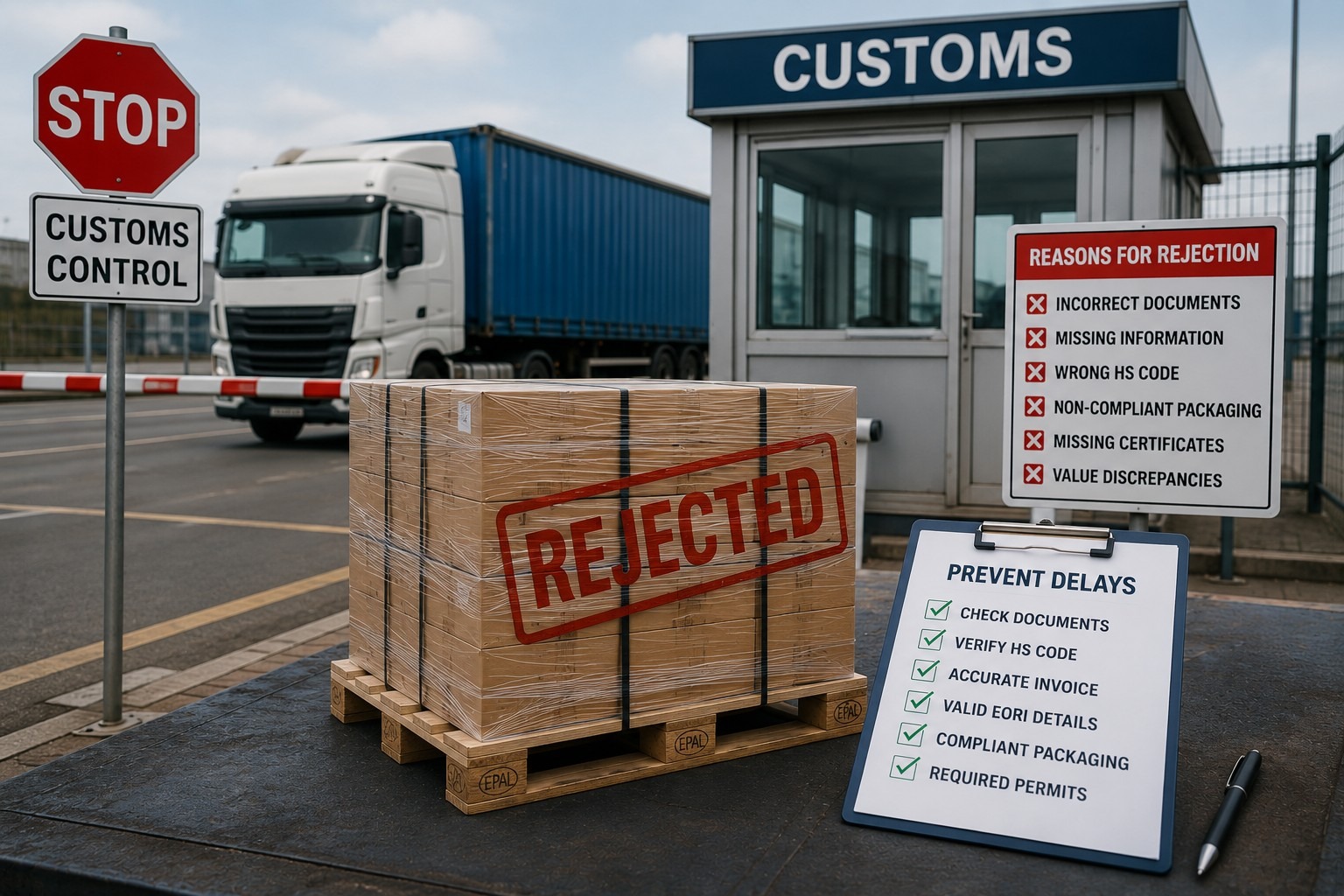
If goods exceed the allowed quantities or are packaged incorrectly, the
pallet may be rejected at the depot or hub, and wasted journey charges may
apply.
Why dangerous goods shipments are sometimes refused
Dangerous goods are regulated for safety reasons, which is why additional
checks are often required before transport.
A shipment may be refused if the goods are not declared properly, the
packaging is unsuitable, required documents are missing, the goods are
prohibited within the network, the labels or markings are incorrect, or
the shipment cannot legally travel under transport regulations.
In many cases, regulated freight can still be shipped successfully once
the correct information is provided. The most common reason for refusal is
not the goods themselves, but how they were prepared and declared. You can
find an overview of what we carry on our
dangerous goods shipping page.
Why you should contact us before booking dangerous goods
One of the biggest mistakes businesses make is assuming dangerous goods
can be booked like standard freight. In reality, regulated shipments
usually need to be reviewed before collection can be confirmed.
This is because acceptance depends on the exact product, its dangerous
goods classification, the packaging type, the quantity being shipped, the
transport regulations that apply, and network restrictions. Even products
that seem relatively harmless may still require special handling or
documentation.
Because requirements vary from shipment to shipment, we encourage you to
contact us before booking dangerous goods freight. This allows us to
review the details and confirm whether the goods can be transported, what
documentation is required, whether additional packaging or labels are
needed, and whether any restrictions apply. Checking these details before
collection helps reduce the risk of delays, refusals, or compliance issues
later in transit.
What the dangerous goods approval process usually looks like
Although requirements vary, the approval process usually follows these
steps:
1. Send us the shipment details. We will normally ask about the
product, quantity, packaging type, destination, and any visible hazard
labels.
2. Submit the MSDS document. In most cases we will ask for the
latest Material Safety Data Sheet for review.
3. Shipment assessment. The shipment is reviewed to check
classification, transport restrictions, packaging suitability, handling
requirements, and whether the goods can legally travel.
4. Additional requirements confirmed. We may advise that extra
labels are required, packaging needs improving, quantity restrictions
apply, or specialist handling is needed.
5. Approval or refusal. Once reviewed, we can confirm whether the
shipment can proceed.
This process helps ensure regulated freight moves through the network
safely and compliantly.
What is an MSDS document and why is it important?
MSDS stands for Material Safety Data Sheet. It contains essential safety
information about a product, including its chemical composition, hazard
classification, handling instructions, storage guidance, emergency
procedures, and transport information.
The MSDS is used to assess whether the goods can legally travel, how the
shipment must be handled, whether additional restrictions apply, and what
packaging or labelling is required. Without a current MSDS, dangerous
goods shipments often cannot be approved for transport.
It is important to make sure the MSDS is up to date and relates to the
exact product being shipped.
Packaging dangerous goods correctly
Good packaging is one of the most important parts of dangerous goods
shipping. Goods must be packaged securely enough to prevent leaks, spills,
or damage during transit.
Use suitable outer packaging.
Packaging advice
should be strong enough to withstand lifting, pallet movement, vibration
during transport, depot handling, and stacking where applicable. Damaged
or weak packaging may result in refusal.
Secure containers properly. Containers holding liquids, chemicals,
or hazardous products should be sealed correctly, protected from movement,
secured upright where required, and checked for leaks before dispatch.
Even small leaks or damaged containers may result in immediate refusal.
Keep the pallet stable. Dangerous goods pallets should remain
stable throughout transport. Avoid leaning loads, uneven stacking,
unsecured boxes, damaged pallets, and excessive overhang. Where possible,
distribute weight evenly, secure the load with wrap or strapping, and use
heavy-duty pallets for heavier shipments.
Use correct labels and markings. Depending on classification,
dangerous goods may require specific hazard labels, orientation arrows, UN
numbers, the Limited Quantity diamond, or handling instructions. Some
dangerous goods require a UN number and specific hazard labels that
correspond to their classification. Incorrect or missing markings can
delay shipments or lead to refusal.
Dangerous goods that need extra attention
Some products are subject to stricter transport controls than others.
Additional checks are commonly required for lithium batteries, flammable
liquids, aerosols, gas cylinders, corrosive chemicals, fuel products, and
pressurised containers.
Lithium batteries deserve particular attention, as the rules have
tightened recently. As an example of how UN numbers work in practice,
lithium-ion batteries shipped on their own travel under UN3480, while
those packed with or contained inside equipment travel under UN3481 — and
the two carry different packaging and documentation requirements.
Regulations now require lithium-ion batteries shipped on their own, packed
with equipment, or installed in equipment and vehicles to be transported
at a state of charge of 30% or less in many cases. Battery technology is
also evolving faster than many shippers realise — newer sodium-ion
batteries, for example, are now classified separately from lithium-ion
despite similar packaging requirements.
Even if you have shipped a product before, do not assume it will
automatically be accepted again. Network rules, packaging requirements,
transport routes, and quantity limits can all change over time.
Recent regulatory changes worth knowing
Dangerous goods rules are updated regularly. Two recent changes are
particularly relevant for businesses shipping regulated freight:
Documentation must travel in the driver’s cab, not attached to
the package or pallet. This changed how some shippers previously
presented paperwork.
Driver training now applies even to Limited Quantity loads under
ADR, meaning the carrier side of compliance has tightened as well as the
shipper side.
These changes reinforce why it is worth confirming current requirements
before each shipment rather than relying on how a product was shipped in
the past.
What happens if dangerous goods are declared incorrectly
Incorrectly declared dangerous goods can create serious safety and
compliance issues. Depending on the situation, the shipment may be
refused, delayed, isolated at the depot, returned to the sender, or
charged additional fees for repacking. It may also stop moving through the
network, breach transport regulations, or trigger a safety investigation.
Undeclared dangerous goods are one of the biggest risks within pallet
networks, because they can create serious hazards for drivers, depot
staff, vehicles, and other freight. Even accidental non-disclosure can
lead to a shipment being stopped or refused.
What we do not do
To keep responsibilities clear, it is worth setting out what falls to the
shipper rather than the carrier. Pallet2Ship does not pack dangerous
goods, classify dangerous goods on your behalf, issue MSDS documents,
provide dangerous goods certification, or guarantee acceptance before a
shipment has been reviewed.
Customers remain responsible for declaring goods correctly and ensuring
packaging and documentation are compliant before collection. What we can
do is review your shipment details, help you understand what is usually
required, and confirm whether the goods can be transported safely through
the network.
Keep records and photographs
Before collection, it is good practice to photograph the pallet, keep
copies of the MSDS, save shipment records, retain booking confirmations,
and record the condition of the packaging before dispatch. This can help
if questions arise during transport or delivery.
When to contact us before shipping
You should always contact us before shipping if the product contains
chemicals or solvents, the goods are flammable or corrosive, the shipment
contains batteries, the goods are pressurised, warning labels already
appear on the packaging, or you are simply unsure whether the goods are
regulated. It is always safer to confirm acceptance before dispatch than
to risk refusal later.
Dangerous goods shipping checklist
Before dispatching regulated freight, check that:
- the goods have been declared correctly
- the latest MSDS is available
the product qualifies for Limited Quantity transport, if applicable
- packaging is secure and undamaged
- containers are sealed properly
- hazard labels and markings are attached
- the pallet is stable
- shipment approval has been confirmed
- shipment details are accurate
A simple review before booking can prevent major delays and compliance
problems later.
Final thoughts
Shipping dangerous goods does not need to be overly complicated, but it
does require accurate information, suitable packaging, and proper approval
before transport. Most
problems happen when shipments are not declared correctly, MSDS documents
are missing, packaging is unsuitable, labels are incorrect, or
restrictions are not checked in advance.
With the right preparation, many dangerous goods shipments can move safely
and compliantly through the network. If you are unsure whether your goods
may be classed as dangerous goods,
contact us before
booking and we can help explain what information or documentation may be
required.
If you have any questions regarding our services,
tracking your parcel or advice, we're here